
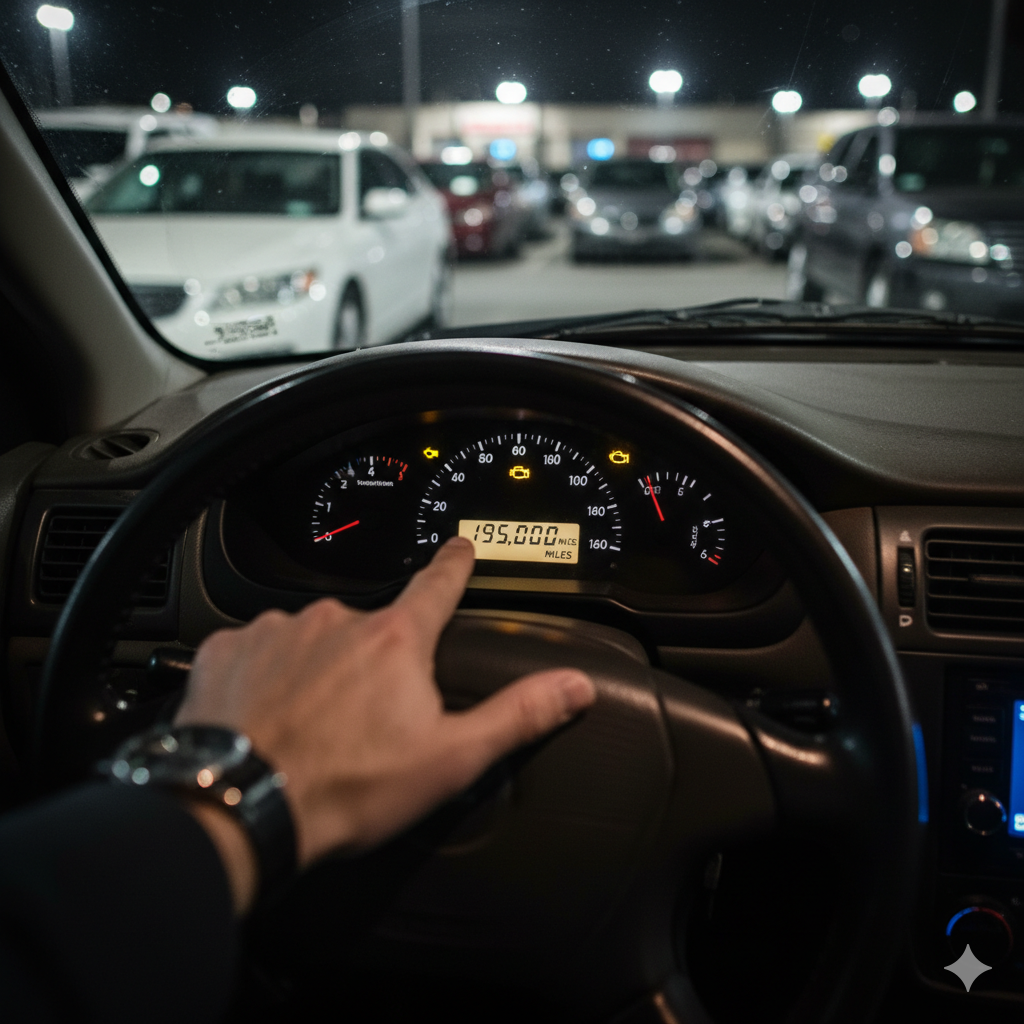
When you’re looking to buy a used car, one question probably weighs on your mind: how many miles are too many? Miles tell a story about a car’s past, but they don’t tell the whole story.
You want a vehicle that won’t break down soon after you drive off the lot, yet finding the perfect balance between price and reliability can be tricky. You’ll discover what mileage really means for a used car’s health. By the end, you’ll know exactly how to spot a smart buy—and avoid costly mistakes.
Keep reading to protect your wallet and drive with confidence.
Mileage And Car Value
Mileage plays a big role in deciding a used car’s value. It shows how much the car has been driven. Buyers often check mileage first. It helps them guess how much life the car has left. Cars with high mileage can cost less. This is because they may need more repairs soon. Sellers must price cars carefully based on mileage. Understanding mileage and car value helps buyers and sellers make smart choices.
Impact Of High Mileage On Price
High mileage usually lowers a car’s price. More miles mean more wear and tear. Parts like the engine, tires, and brakes may need fixing. Buyers see high mileage as a risk. It can lead to unexpected costs later. Sellers often reduce the price to attract buyers. Some cars hold value better despite high miles. Brand and maintenance history can affect this. Still, a car with 100,000 miles will cost less than one with 30,000 miles in most cases.
Depreciation Trends Over Time
Cars lose value quickly in the first few years. Mileage adds to this drop. After 60,000 miles, depreciation often speeds up. The car’s value can fall faster with more miles. Older cars with low mileage keep value better than high-mileage ones. Depreciation slows as the car ages past 10 years. But very high mileage can still cut value. Understanding these trends helps buyers find fair prices. It also helps sellers set realistic expectations.
Common Mileage Thresholds
Mileage is a key factor when buying a used car. It shows how much the car has been driven. Different mileage levels affect a car’s value and condition. Knowing common mileage thresholds helps buyers choose wisely.
Typical Limits For Used Cars
Many used cars have a mileage limit around 100,000 miles. Cars under this limit often run well with routine care. Between 100,000 and 150,000 miles, wear and tear rise. Some parts may need replacement soon. Above 150,000 miles, expect more repairs and maintenance. Cars with very high mileage can still last but need careful checks.
Differences By Vehicle Type
Small cars usually reach 150,000 miles before major issues. SUVs and trucks often last longer, sometimes over 200,000 miles. Luxury cars may show problems earlier due to complex parts. Electric cars have fewer moving parts and less wear. Diesel engines in trucks and vans can run much longer than gasoline engines.
Reliability Factors
Understanding how many miles are too many on a used car depends on several reliability factors. These factors help predict how well a car will perform as the miles add up. Not all high-mileage cars are unreliable. Some last longer due to good care and gentle use. Let’s explore key reliability factors that impact a car’s lifespan and dependability.
Role Of Maintenance History
Maintenance history plays a big role in a car’s reliability. Regular oil changes, brake checks, and tire rotations keep a car healthy. A well-maintained car faces fewer breakdowns and runs longer. Service records show if the previous owner took care of the vehicle. Cars with missing or poor maintenance records may hide problems. Always ask for detailed maintenance history before buying.
Influence Of Driving Conditions
Driving conditions affect how fast a car wears out. City driving with lots of stops and starts causes more stress. Highway driving usually means steady speeds and less strain. Harsh weather, like snow or extreme heat, can also damage parts faster. Off-road or rough road use may cause extra wear. Knowing where and how the car was driven helps estimate its true condition.
Signs Of Excessive Wear
Signs of excessive wear on a used car reveal its true condition. High mileage often brings hidden problems. These issues affect safety, reliability, and repair costs. Spotting wear early helps avoid costly mistakes.
Mechanical Issues To Watch For
Listen for strange noises from the engine or brakes. Check for leaks under the car. Look at the exhaust smoke color. Watch for rough idling or stalling. Notice any delay or slipping in the transmission. Test the brakes for a soft or spongy feel. Inspect the tires for uneven wear. These signs show the car may need major repairs soon.
Appearance And Interior Wear
Check the seats for tears, stains, or heavy wear. Look at the steering wheel and gear shift for shiny spots. Examine the dashboard for cracks or faded areas. Smell inside for musty or moldy odors. Inspect the door handles and buttons for looseness. Worn interiors hint at poor maintenance and heavy use. They may mean more hidden problems.
Expert Recommendations
Experts often guide buyers on how many miles are too many for a used car. Their advice helps avoid costly repairs and unexpected problems. Understanding these recommendations can save time and money.
When To Walk Away
Experts suggest walking away if a used car has over 100,000 miles. High mileage often means more wear and tear. It can lead to expensive repairs soon. If the car shows signs of poor maintenance, avoid it. Rust, strange noises, or warning lights are red flags. Trust your instincts and skip risky deals.
Mileage Vs. Age Considerations
Mileage is not the only factor to check. A 10-year-old car with 80,000 miles may be better than a 5-year-old with 120,000 miles. Age affects rubber parts, fluids, and electronics. Low miles do not guarantee good condition if the car sat unused for long. Experts recommend checking service records and overall car history. Balance mileage and age to find the best used car.
Tips For Buyers
Buying a used car needs smart choices. Mileage plays a big role in deciding a car’s value. Knowing how to check and use mileage info helps buyers avoid bad deals. Here are some tips to guide you through this process.
How To Check Mileage Accuracy
Start by looking at the car’s service records. These often show mileage at each service visit. Compare these numbers with the odometer reading. Use online vehicle history reports to spot any mileage changes. Look for wear and tear inside the car. Excessive wear may not match a low mileage claim. Ask the seller about the car’s past use and trips. Trust your eyes and questions. Mileage can be changed, but some details can’t be hidden.
Negotiation Strategies
Use mileage as a key point in price talks. High mileage usually means lower price. Point out any needed repairs linked to mileage. Offer less if you find doubts in mileage accuracy. Mention typical costs of future maintenance for high-mileage cars. Stay calm and clear in your offers. Be ready to walk away if the price does not feel right. Remember, good deals come to patient buyers.
Frequently Asked Questions
How Many Miles Is Too Much For A Used Car?
Generally, 100,000 miles is considered high mileage. However, well-maintained cars can last beyond 200,000 miles. Check service history and condition.
Does High Mileage Reduce A Used Car’s Value?
Yes, high mileage usually lowers a car’s resale value. Buyers prefer low-mileage vehicles for reliability and longevity.
Can A Used Car With High Miles Be Reliable?
Yes, if properly maintained, high-mileage cars can be reliable. Regular servicing and repairs extend vehicle life significantly.
What Factors Affect A Used Car’s Mileage Lifespan?
Maintenance, driving habits, and vehicle model affect lifespan. Highway miles are less stressful than city driving for cars.
Conclusion
Used car mileage affects its value and reliability. High miles don’t always mean problems. Regular maintenance keeps cars running longer. Check service records before buying any car. Consider how you plan to use the vehicle. Some cars handle mileage better than others.
Trust your instincts and ask questions. A well-kept car can still serve you well. Choose wisely to avoid future troubles. Miles matter, but condition matters more.

- Safety Essentail Car Accessories: If your car is parked in an accident and desperately waiting for help; It’s worth havi…
- Christmas Day Gifts for Him: A surprise gift for first-time car owners or anyone who owns a car, truck or RV but isn’t f…
- Safe And Durable Tool Kit: This bag is made of sturdy 600D nylon canvas that can withstand scratches and rough handling;…

- Protect Your Safety On Road:We Provide This Compact And Practical Roadside Emergency Kit,Durable Tools That Are Designed…
- DURABLE, WATERPROOF, REFLECTIVE: Stylish-black waterproof storage hand bag, the upper leather material is effective dust…
- APPLICABLE SCENE: Perfect for the home, workplace, cars, includes preparedness survival tools for outdoor activities lik…

- Welcome Sign: you will receive 1 set of used car theme outdoor flag, 1 set of save here feather flag, 1 set of easy fina…
- Eye Catching Design: the used car sale feather flag set is approximately 7 ft in total height and the flag is approx. 5….
- Easy to Assemble: simply assemble the poles, insert them into the used car sale swooper flag, and secure the flag in pla…
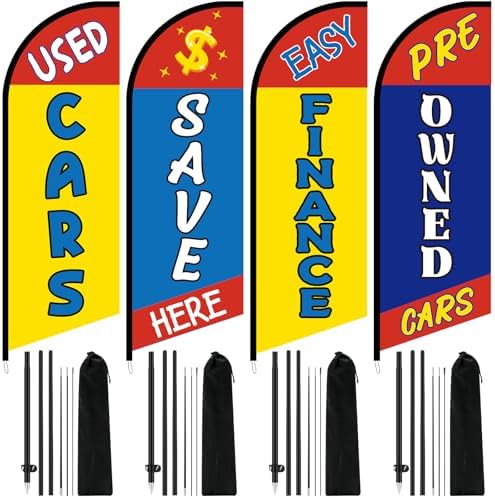
- Comprehensive Visibility Kit: our second hand car flagpole kit includes four single-sided printed feather flags, four se…
- Quality Weatherproof Material: second hand cars feather flags are made of quality warp knitted fabric, which is reliable…
- Large Size: the size of the car dealer flags are 1.8 x 5.4 ft, and the assembled flag pole height is 7 ft; This feather …

- The Road Guardian- The portable roadside assistance kit is designed and hand picked by a group of experienced veterans a…
- Top-Notch Digital Auto Tire Inflator- lightweight and compact air compressor can inflate your standard vehicles tire in …
- Copper-Clad Aluminum 12 Feet 8 Gauge Jumper Cable- A durable battery starter cable is a must-have for your trip. Unlike …

- Comprehensive and Diverse First Aid Supplies: Our first aid kit offers a comprehensive medical supplies to effectively a…
- Compact and Portable Design: Despite its extensive contents, this emergency kit is thoughtfully designed to be compact a…
- Organized and User-Friendly Layout: The small trauma kit features an organized layout, with each inner sleeve categorize…

- 【MULTI-PURPOSE】 : Perfect for the home, workplace, cars, it also includes preparedness survival tools for outdoor activi…
- 【MULTI-FUNCTION KIT】-Great kit for most auto emergencies, such as winter weather, road trips, minor breakdown and other …
- 【WELL-ORGANIZED】 : Fully well-organized interior compartments provides quick access. The name of all the tools and acces…

- Car Essential – An invaluable addition to your vehicle safety kit. 2 in 1 window breaker and seatbelt cutter, allowing y…
- High Quality – High-grade carbon steel double-headed makes the hammer extremely sturdy, easy to break windows and save l…
- Well Designed – The bright orange color makes it easy to find in the dark or in a state of panic. It combines a protecti…

- [PROFESSIONAL QUALITY ] – AUTOWN Tire Repair Kits are made of refined high-quality steel, AUTOWN upgraded tire patch kit…
- [DURABLE & SAFE ] – The tire puncture repair set own great adhesion, flexibility, shock absorption, and not easy to agin…
- [MULTIPLE USES ] – The AUTOWN 68 pcs tire repair heavy duty kit repairs easily all types of tires on cars, motorcycles, …
Recent Posts
Dreaming of a new car but dreading the monthly payment? Discover how understanding car loan interest is the secret to making your dream ride surprisingly affordable.
The true cost of replacing an electric car battery might shock you. We break down the surprisingly simple numbers so you know exactly what to expect.