
Have you ever turned the key in your car’s ignition only to find it won’t start? It’s frustrating, especially when you don’t know why.
One surprising reason your car might not start could be related to the oil. Yes, the very oil that keeps your engine running smoothly might be causing trouble. If you want to avoid costly repairs and get your car back on the road fast, understanding how oil affects your car’s starting ability is crucial.
Keep reading to uncover the connection between oil and your car’s starting problems—and what you can do about it.
How Oil Affects Engine Start
Engine oil plays a key role in starting your car. Without the right oil condition, the engine may struggle to start or not start at all. Understanding how oil affects engine start helps prevent car trouble and keeps your vehicle running smoothly.
Role Of Oil In Engine Function
Oil lubricates engine parts to reduce friction. It helps metal parts move smoothly during startup. Without proper lubrication, parts rub together and wear out fast. Oil also helps cool the engine by carrying heat away. It cleans the engine by picking up dirt and tiny particles.
During start, oil pressure builds up to protect the engine. Low or dirty oil can delay this pressure. This causes extra strain on the engine and the battery. Good oil condition ensures the engine starts easily and lasts longer.
Oil Viscosity And Cold Starts
Viscosity means how thick or thin the oil is. Thick oil moves slower and can make starting harder in cold weather. Thin oil flows quickly and helps the engine parts move right away. Using the right oil viscosity for your climate is important.
In cold weather, oil thickens and slows down. This makes the engine work harder to start. Choosing oil with proper viscosity helps the engine start faster. It also reduces wear and saves fuel. Check your car manual for recommended oil types.
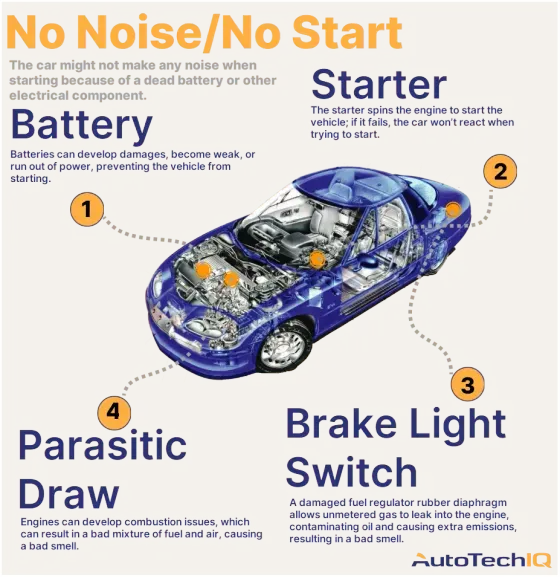
Credit: www.autotechiq.com
Signs Of Oil-related Starting Issues
Oil plays a key role in your car’s engine health. Without proper oil levels or clean oil, your car might struggle to start. Recognizing signs of oil-related starting issues helps you spot problems early. This prevents bigger engine damage and costly repairs.
Signs show the engine is not getting the oil it needs. These signs affect how the engine sounds and how easily it starts. Pay attention to unusual noises and difficulty in cranking the engine.
Unusual Engine Noises
Low or dirty oil causes strange sounds in the engine. You might hear knocking, tapping, or grinding noises. These happen because parts inside the engine do not get enough lubrication. The metal parts rub together, causing these noises. Ignoring these sounds can lead to severe engine damage.
Difficulty Cranking Engine
Oil problems can make the engine hard to crank. The engine may turn slowly or not at all. Thick or old oil makes it tough for the engine to move smoothly. The starter motor works harder, and the battery drains faster. This issue shows oil is not flowing well inside the engine.
Common Oil Problems Impacting Start
Oil plays a big role in your car’s engine health. Problems with oil can stop your car from starting. Understanding these issues helps you avoid trouble on the road.
Below are common oil problems that can affect your car’s start.
Low Oil Levels
Low oil means less lubrication for engine parts. This causes more friction and heat. The engine may seize or fail to turn over. Sensors can detect low oil and prevent starting. Checking oil levels often helps avoid this problem.
Dirty Or Contaminated Oil
Oil gets dirty over time from dust and engine wear. Dirty oil loses its ability to lubricate well. It can clog oil passages and filters. This leads to poor engine performance and hard starting. Changing oil regularly keeps the engine clean and smooth.
Using Wrong Oil Type
Different engines need specific oil types and grades. Using the wrong oil can cause poor flow or thickening. Thick oil makes the engine work harder to start. Thin oil might not protect parts properly. Always use the oil recommended in your car manual.
Diagnosing Oil Issues Before Starting
Oil problems can stop your car from starting. Diagnosing these issues before starting helps avoid damage. Checking oil level and condition is the first step. Next, check oil pressure and sensors. These steps ensure your engine runs smoothly.
Checking Oil Level And Condition
First, check the oil level using the dipstick. Pull it out, wipe clean, reinsert, and pull again. The oil should be between the minimum and maximum marks. Too little oil can cause engine damage. Also, observe the oil color and texture. Dark, dirty oil needs changing. Thick or gritty oil may block the engine parts. Clean, amber oil shows good condition. Regular checks prevent starting problems linked to oil.
Oil Pressure And Sensor Checks
Oil pressure keeps engine parts lubricated. Low pressure can stop the car from starting. Listen for unusual noises when turning the key. A warning light on the dashboard can signal oil pressure issues. Use a pressure gauge for accurate measurement. Sensors monitor oil pressure and send signals to the car’s computer. Faulty sensors may give wrong warnings or prevent starting. Testing sensors ensures correct readings and safe engine operation.
Fixes For Oil-related Starting Failures
Fixing oil-related starting problems is key to getting your car running again. Oil keeps the engine parts moving smoothly. Without proper oil care, the engine can struggle to start or even get damaged. Simple steps can help avoid these issues and improve your car’s start-up.
Check the oil level and quality often. Use the right oil type for your car. Fix any leaks quickly to keep the oil where it should be. These fixes keep the engine healthy and ready to start every time.
Changing Oil And Filter
Old oil gets dirty and thick. This makes it hard for the engine to turn over. Change the oil regularly as the car manual says. Always replace the oil filter. The filter cleans the oil and stops dirt from reaching the engine. Fresh oil and filter help the engine start smoothly.
Using Correct Oil Grade
Oil comes in different thickness levels called grades. Using the wrong grade can cause starting problems. Thicker oil can slow the engine, especially in cold weather. Thinner oil may not protect parts well. Check your car manual for the right oil grade. Use only that grade to keep the engine healthy.
Addressing Oil Leaks
Oil leaks lower the oil level. Low oil means poor lubrication. The engine parts rub more and can get stuck. Find leaks under the car or near the engine. Common leak points include the oil pan and seals. Fix leaks fast by replacing gaskets or seals. Keeping oil full helps the engine start without trouble.
Credit: www.youtube.com
When Oil Is Not The Cause
Sometimes, your car won’t start, but oil is not the problem. Many other parts can cause this issue. Understanding these common causes helps you fix the problem faster. Here are some key areas to check when oil is not the cause.
Battery And Starter Problems
The battery often causes starting problems. A dead or weak battery cannot power the starter motor. The starter motor turns the engine over to start it. If the starter is faulty, the engine won’t crank. Check battery voltage and connections first. Clean any corrosion on battery terminals. Replace the battery or starter if needed.
Fuel System Issues
The engine needs fuel to start and run. A clogged fuel filter can stop fuel flow. A bad fuel pump fails to deliver fuel to the engine. Old or contaminated fuel can cause problems too. Listen for a humming sound from the fuel pump. Replace filters or fuel pump if necessary. Use fresh fuel to avoid starting issues.
Ignition System Faults
The ignition system creates the spark to ignite fuel. Faulty spark plugs may not create a strong spark. Worn ignition coils can cause weak or no spark. Problems with the ignition switch can stop power flow. Check spark plugs for wear or damage. Test ignition coils with a multimeter. Repair or replace faulty parts to fix starting problems.

Credit: urbsgarage.com
Frequently Asked Questions
Can Low Oil Cause A Car Not To Start?
Low oil usually won’t prevent a car from starting. However, extremely low oil can damage the engine, causing starting issues. It’s essential to maintain proper oil levels for engine health and reliable starts.
Does Dirty Oil Affect Car Starting?
Dirty oil can cause engine wear but rarely stops a car from starting. It reduces engine efficiency and can lead to long-term damage. Regular oil changes keep the engine clean and help maintain smooth starts.
Can Oil Leaks Stop A Car From Starting?
Oil leaks themselves don’t directly stop a car from starting. But severe leaks can lead to low oil levels, risking engine damage. Fix leaks promptly to maintain oil levels and avoid starting problems.
How Often Should Oil Be Changed To Avoid Starting Issues?
Change oil every 3,000 to 7,500 miles, depending on your car and oil type. Regular oil changes ensure engine lubrication and prevent damage that might cause starting problems.
Conclusion
Oil plays a key role in your car’s engine health. Low or dirty oil can cause starting problems. Regular oil checks help avoid these issues. Keep your oil fresh and at the right level. This simple step saves time and money later.
Don’t ignore oil warnings or strange engine noises. A well-maintained car starts smoothly every time. Take care of your oil, and your car will thank you. Easy to do, important to remember.
Recent Posts
Durable Jeep Wrangler American Flag License Plate Frame for Patriotic Drivers
Have you ever felt frustrated by a plain, worn-out license plate frame on your Jeep Wrangler? It’s a small detail, but it can really affect your vehicle’s look.Every time you see that dull...
Slim Design Audi Black License Plate Frame for Sleek Car Styling
Have you ever struggled with a bulky, noisy license plate frame that just doesn’t fit right? It can be so frustrating when your car’s style feels off or the frame rattles every time you...